




In today’s world, very few professionals spend their entire day sitting at a desk and industrial vehicles dealerships are no exception. Sales teams are constantly moving: assisting customers, coordinating test drives, fixing machines or handling operational tasks. Even outside working hours, especially on weekends, stepping away from the computer is simply part of the job.
The problem is that leads don’t follow the same rhythm.
Customers send leads all the time, during lunch breaks, late in the evening, or over the weekend when they finally have time to browse and compare options. And more often than not, they reach out to multiple dealerships at once. The one that responds first usually wins the conversation.
This is where many dealerships face a very real limitation. Lead management is still heavily connected to desktop workflows, meaning responsiveness depends on being physically present at a computer. As soon as that connection is broken, even temporarily, delays start to appear. A lead that comes in on a Saturday afternoon might not be answered until Monday morning and by then, the opportunity is often gone.
That’s why the idea of why answering to the leads only from computer is not efficient is no longer just a question – it’s something that directly impacts results.

The Hidden Cost of Desktop-Only Workflows
At first, managing leads from a computer feels organized and reliable, teams are used to working that way. But in practice, this setup introduces difficulties in a fast-moving environment.
The biggest issue is accessibility. If your system only works effectively on a desktop, you’re tied to a specific place. In a dealership setting where movement is constant, that quickly becomes a limitation. Even during working hours, it’s not always realistic to return to a desk immediately when a new lead arrives.
This challenge becomes even more obvious outside of working hours. Evenings and weekends are often when customer activity peaks, yet they’re also the times when teams are least likely to be at their computers. The result is a growing gap between when a lead comes in and when it gets a response.
On top of that, traditional tools like Gmail or Outlook were never designed for structured lead management. Conversations get buried, follow-ups become harder to track, and there is little visibility into performance. What starts as a manageable process can quickly turn into something inefficient and reactive.
Why Speed Matters
Responding quickly is no longer just a matter of good service, it’s a key driver of conversion. The earlier you engage with a lead, the higher your chances of starting a meaningful conversation and guiding the customer through the buying process.
A delay of even a couple of hours can significantly reduce engagement. On the other hand, responding within minutes creates great impression. It shows availability, professionalism, and interest, which are the qualities that customers immediately notice.
This is why dealerships that focus on improving response time consistently see better results. Faster replies lead to more conversations, and more conversations naturally lead to higher conversion rates. In other words, the ability to respond quickly directly helps improve dealership response time and conversion rate in a measurable way.
Rethinking Lead Management: From Desk-Bound to Mobile
To keep up with customer expectations, dealerships need a more flexible approach – the one that is not limited by physical location. This is where mobile lead management becomes essential.
Instead of relying on a fixed workspace, sales teams can stay connected wherever they are. Whether they are on the showroom floor, stepping out for a break, or away from the dealership during the weekend, they can still access and respond to incoming leads in real time.
This shift changes everything. A lead no longer waits until someone is back at their desk. It is seen, handled, and moved forward immediately, keeping the interaction alive while the customer is still engaged.
Why Mobile Alone Isn’t Enough
Of course, many tools already allow mobile communication: email apps, messaging platforms, and even WhatsApp. But using these tools for lead management quickly reveals their limitations.
They lack structure. Conversations are not organized as leads, there is no clear overview of priorities, and tracking performance becomes nearly impossible. While they allow communication, they do not support efficient workflow management.
What’s needed is a solution that combines that structure with true mobility.
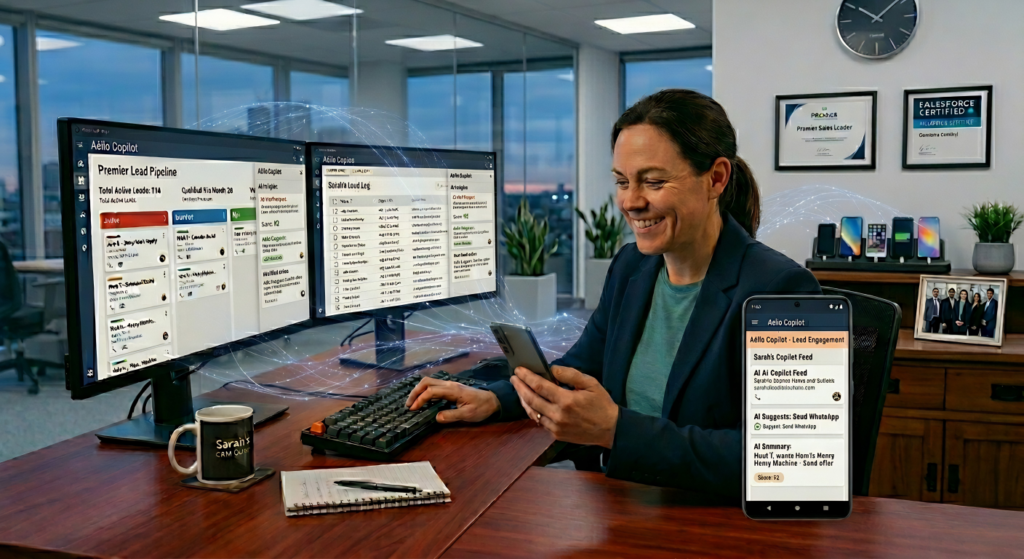
This is exactly where Copilot’s mobile application comes in. Instead of adapting generic tools, it provides a system specifically designed for managing leads on the go.
With Copilot, sales teams receive push notifications as soon as a new lead arrives, making it impossible to miss an opportunity. They can open the lead, review the details, and respond immediately – no matter where they are.
Speed does not come at the expense of quality. Built-in templates allow users to send professional, consistent replies in just one click, which is especially useful during busy moments. Instead of typing long messages on a phone, the process becomes fast and efficient.
At the same time, all conversations remain organized within a clear interface. This ensures that even on a mobile device, users maintain full visibility and control over their leads.
You can easily see it in action with a free demo!
Centralization and Visibility, Wherever You Are
Another important advantage of a mobile-first system is the ability to stay connected not just to individual leads, but to the bigger picture. Dealerships often receive inquiries from multiple sources, and managing them separately can quickly become overwhelming.
By centralizing all leads into one platform, teams gain a complete overview of their activity. This makes it easier to prioritize, follow up, and ensure that no opportunity is lost.
If you’d like to dive deeper into this topic, you can read more here:
https://blog.aello-copilot.com/lead-management/centralize-leads-industrial-vehicle-dealers/
Turning Weekends into Opportunities
One of the clearest benefits of mobile lead management appears during weekends. This is often when customer interest is at its highest, but also when traditional workflows are least effective.
Without mobile access, leads sit unanswered until the next working day. With a mobile solution, they can be handled immediately, keeping the conversation active and increasing the chances of conversion.
This ability to stay responsive at all times ensures that no opportunity is missed simply because someone is away from their desk.
A More Natural Way to Work
Ultimately, managing leads on the go is not just about speed – it’s about aligning tools with how people actually work. Dealership teams are dynamic, mobile, and constantly multitasking. Their lead management system should reflect that reality.
By removing the dependency on a desk, dealerships create a more flexible and efficient workflow. Sales teams can focus on their responsibilities without worrying about missing leads, while still maintaining high responsiveness.
Final Thoughts
Relying solely on a computer to manage leads is no longer enough in a fast-moving, customer-driven environment. As expectations continue to rise, the ability to respond quickly and consistently becomes a defining factor in success.
Mobile lead management bridges that gap. It allows dealerships to stay connected, responsive, and efficient – no matter where they are. Because in today’s market, being available at the right moment can make all the difference.
Ready to take control of your leads?
Aéllo Copilot helps vehicle and machinery dealers capture, manage, and convert every lead — from every channel.
Get your free demo →