



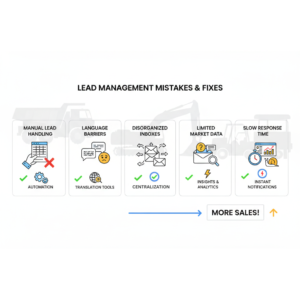
Industrial vehicle dealers across Europe face a tough challenge. They invest heavily in marketplaces like Autoline, TruckScout24, and Mascus to generate leads. However, many still lose potential sales through simple operational mistakes. In practice, these errors happen daily in truck, construction equipment, and forklift dealerships. They cost revenue and frustrate sales teams.
This guide identifies 5 proven mistakes we see repeatedly. For each mistake, we provide concrete fixes that work in real dealerships. Our focus stays on practical actions, not theory. That’s why we avoid generic advice. Instead, we show what actually improves lead conversion for industrial vehicles.
Mistake 1: Not Replying to Leads Fast Enough
Industrial vehicle buyers shop around. They contact multiple dealers for the same machine or truck. The first dealer to respond professionally often wins the opportunity. Yet many dealers take hours or even days to reply.
The Speed Problem
Response time directly impacts conversion. Studies show leads contacted within 10 minutes are far more likely to convert. After one hour, conversion drops significantly. For expensive equipment like excavators or trucks, buyers want immediate attention. Slow responses signal poor service.
In practice, delays happen for many reasons. Leads arrive outside business hours. Salespeople are busy with other tasks. The right person isn’t available. Whatever the reason, the result is the same: lost opportunities. A construction equipment dealer might lose 30% of leads simply by responding too slowly.
How to Respond Faster
Set up instant acknowledgment for all leads. Even if you can’t provide full details immediately, acknowledge receipt. Tell the buyer their inquiry is important and someone will contact them soon. This simple step improves perception dramatically.
Next, implement alerts for new leads. Salespeople should get immediate notifications on their phones or computers. Create escalation rules for unanswered leads. If no one responds within a set time, the lead escalates to another team member or manager. This ensures no lead gets forgotten.
Finally, measure your response times. Track how long it takes to first contact and to provide useful information. Set targets and improve continuously. Faster response becomes a competitive advantage in industrial vehicle sales.
Mistake 2: Not Using a Lead Management System
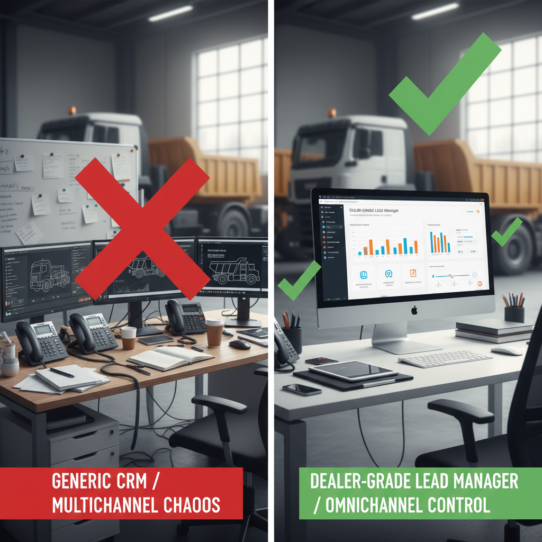
Surprisingly, many industrial vehicle dealers still manage leads in email inboxes or spreadsheets. They have no central system to track conversations, follow-ups, or lead status. This creates chaos as leads get lost, forgotten, or duplicated.
The Chaos of Disorganized Leads
Imagine a construction equipment dealer with five salespeople. Each person manages their own inbox. Leads from Mobile.de go to one person, leads from Mascus to another. There’s no visibility on who’s handling what. When a salesperson is sick or on vacation, their leads go unanswered. Managers can’t see pipeline or performance.
Worse, the same buyer might contact through different channels. Their email, then call, then message on WhatsApp. Without a central system, these appear as separate leads. Different salespeople might respond, creating confusion. The buyer sees an unprofessional operation. They might take their business elsewhere.
The Centralization Solution
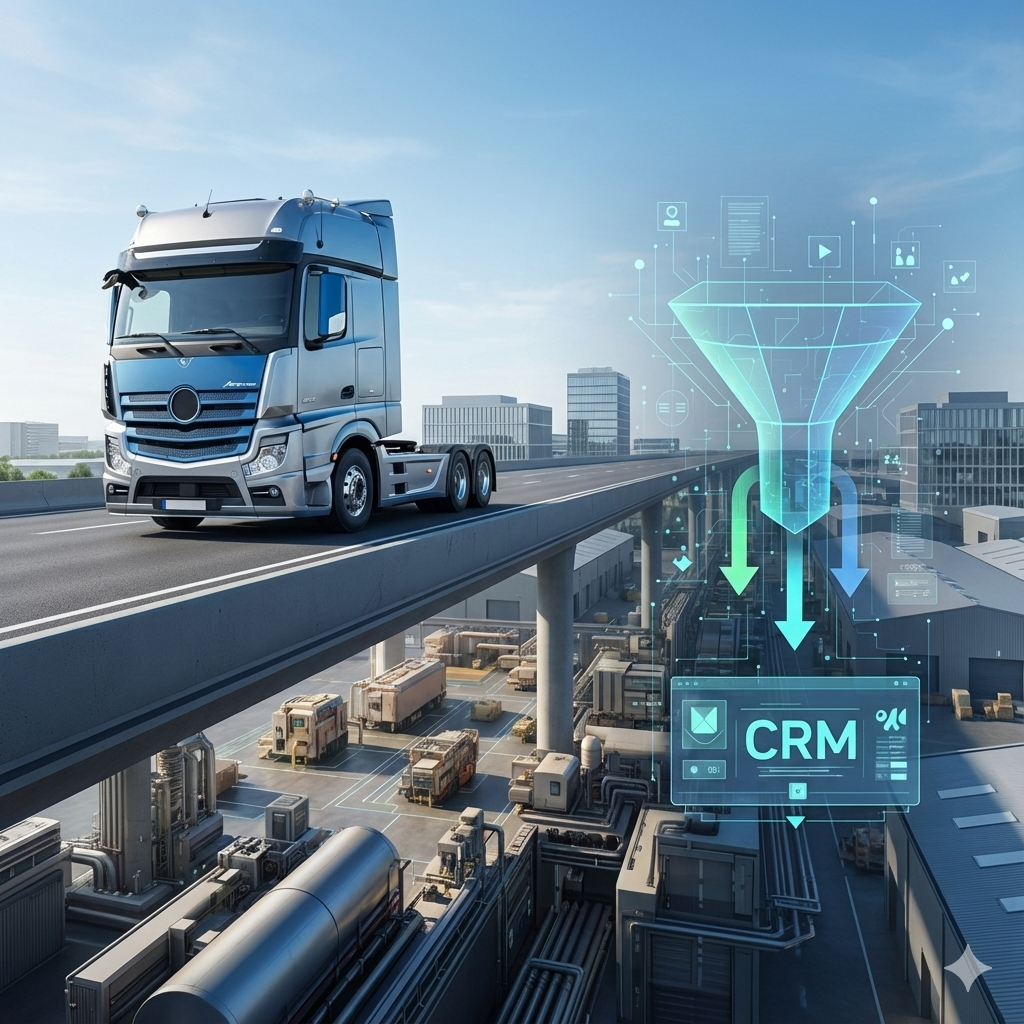
Put all leads in one place. A proper lead management system captures inquiries from every channel: marketplaces, phone, website, WhatsApp. It creates one record per buyer, not per message. This gives complete visibility of every conversation. Sales teams see the full history instantly.
Centralization also enables fair distribution. Rules can assign leads based on territory, language, or specialty. For example, forklift inquiries go to the material handling expert. Truck leads go to the commercial vehicle team. This matches buyer needs with the right salesperson immediately. To understand this better, read our guide on how to centralize leads for industrial vehicle dealers.
Mistake 3: Relying Only on Marketplace Statistics
Marketplaces provide basic metrics: views, clicks, leads. Many dealers use these as their only performance measure. This gives a limited, often misleading picture of what’s actually working.
The Incomplete Picture
Marketplace stats show activity, not results. They tell you how many people saw your ad or clicked “contact.” They don’t show what happened next. Did the person call at all? Did the lead get answered? Was it qualified? Did it convert to a sale? Without this information, you can’t judge true ROI.
For instance, a truck listing might generate many leads but few sales. The marketplace report shows success, but your sales team knows better. Perhaps the leads are low-quality or your response is poor. Without tracking beyond the marketplace, you can’t identify the real problem. You might keep investing in what looks good but doesn’t sell.
Getting Complete Visibility
Track leads from first contact to closed deal. Measure response times, conversion rates, and revenue per lead source. See which marketplaces deliver not just leads, but qualified buyers. Compare cost per lead with actual sales value.
This requires connecting marketplace data with your sales outcomes. Modern systems can do this automatically. They capture the lead source and track it through your pipeline. You see not just how many leads come from Autoline, but how many convert to tractor sales. This informs better advertising decisions. You invest more where it actually generates revenue.
Mistake 4: Answering Every Lead Manually
Many dealers still handle each lead inquiry by hand. A salesperson receives an email from a marketplace. They then type a reply, check stock, and send it. This process repeats for every single lead. In busy periods, this creates bottlenecks. Sales teams get overwhelmed, especially when leads come from multiple channels.
Why This Hurts Your Dealership
Manual responses slow everything down. First, response times increase. Buyers expect quick answers when inquiring about trucks or excavators. If they wait too long, they contact another dealer. Second, consistency suffers. Different salespeople write different replies. Some include all details, others miss key information. This creates a poor buyer experience.
Third, salespeople waste time on repetitive tasks. They could spend that time talking to hot leads or closing deals. Instead, they type the same answers repeatedly. Over a week, this costs hours of productive work. For example, a medium-sized truck dealer might get 50 leads weekly. If each manual reply takes 10 minutes, that’s over 8 hours of work.
The Practical Fix
Automate your first response. Create template replies for common inquiries. These templates should include vehicle specifications, availability, and next steps. Use placeholders for personalization like the buyer’s name and vehicle model. Set up rules to send these automatically when a lead arrives.
However, automation doesn’t mean impersonal. Good templates feel human and helpful. They answer the buyer’s likely questions immediately. For instance, when someone asks about a specific tractor, the auto-reply confirms receipt and provides basic specs. It also promises a personal follow-up soon. This approach cuts response time from hours to minutes.
Mistake 5: Translating Leads Manually
European dealers often receive leads in different languages. A German dealer gets inquiries in French from Via Mobilis. A Dutch dealer gets Spanish messages from Truck1. Many sales teams try to translate these manually via basic tools. This leads to misunderstandings and missed opportunities.
The Language Barrier Problem
Industrial vehicle buyers use their native language when serious. They describe specific needs about load capacity, engine hours, or attachment compatibility. Machine translation often fails with technical terms. For example, “wheel loader” might translate incorrectly, confusing the buyer. Even small errors can kill trust.
Meanwhile, salespeople struggle with foreign languages. They might misunderstand urgency or budget. Some dealers ignore non-native language leads entirely. That’s a direct loss of potential business. In practice, we see dealers missing 15-20% of cross-border leads due to language issues.
How to Solve It
Use professional translation integrated into your workflow. Modern tools can translate incoming messages accurately, preserving technical terms. They should work automatically, not require manual copying and pasting. The goal is to present every lead to salespeople in their working language.
Equally important, outgoing replies should translate seamlessly. When a salesperson writes in German, the system can send perfect message translated into French to the buyer. This maintains professionalism while removing the language barrier. For dealers selling across Europe, this capability becomes essential. It turns language diversity from a problem into an advantage.
Putting It All Together: A Practical Approach
Fixing these mistakes requires a systematic approach. You can’t solve them one by one in isolation. They interconnect in your daily operations. For example, faster responses require automation, which requires centralization. Better tracking requires complete data from all channels.
The Implementation Checklist
Start with these practical steps:
- Audit your current lead handling. How many channels? How many manual steps?
- Choose one marketplace to improve first. Measure current performance.
- Set up automated first responses for that channel.
- Centralize leads from that marketplace into one system.
- Track response times and conversion rates for one month.
- Expand to other channels gradually.
- Review performance weekly with your sales team.
This gradual approach minimizes disruption. It lets you prove value before expanding. Most dealers see improvement within weeks on their first channel. That builds confidence to fix the rest.
How Technology Enables the Fix
Modern lead management systems address all five mistakes simultaneously. They capture leads automatically from marketplaces, phone, and digital channels. They provide instant translation for cross-border inquiries. They centralize everything in one place with complete visibility.
For industrial vehicle dealers, specialized tools like Aello Copilot work particularly well. They understand the unique needs of truck, construction equipment, and forklift sales. They handle long sales cycles and complex buyer journeys. They integrate with European marketplaces natively.
The result is faster responses, better tracking, and higher conversion. Sales teams work more efficiently. Managers see real performance data. Buyers get better service. It’s a win for everyone involved in the transaction.
Moving Forward with Better Lead Management
Industrial vehicle sales remain competitive across Europe. Marketplaces generate opportunities, but dealers must convert them. Avoiding these five common mistakes improves your chances significantly. The fixes are practical and proven in real dealerships.
Remember that lead management isn’t about technology alone. It’s about better processes enabled by the right tools. Start with one improvement, measure results, and expand. Your sales team will appreciate the reduced administrative work. Your buyers will notice the better service. Your bottom line will reflect the improved conversion.
Many dealers using systematic lead management close more deals within months. They respond faster, track better, and sell more efficiently. The investment pays back quickly through increased revenue from existing leads. In a competitive market, that advantage matters.
Ready to fix these mistakes in your dealership? See how specialized lead management works for industrial vehicle dealers. Get a free demo tailored to your truck, construction equipment, or forklift business.
Ready to take control of your leads?
Aéllo Copilot helps vehicle and machinery dealers capture, manage, and convert every lead from every channel.
Book your free demo →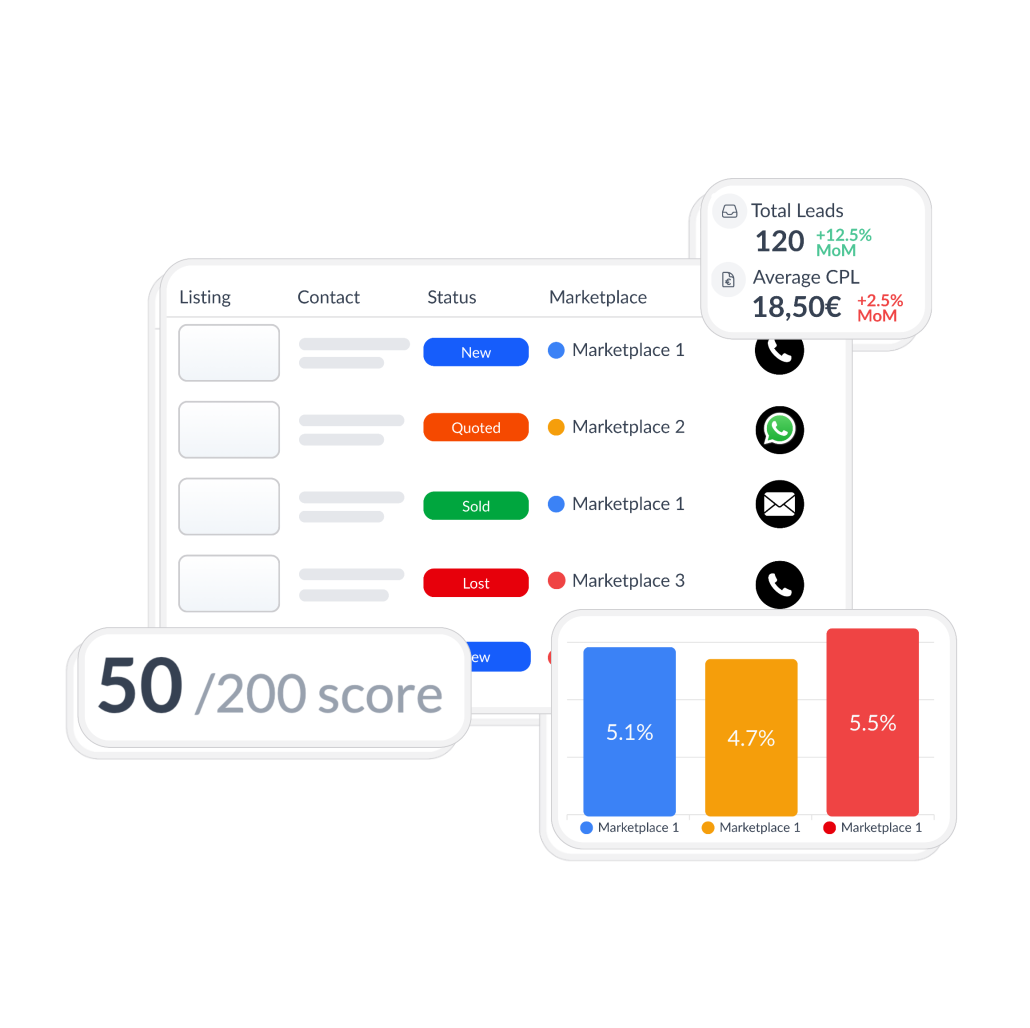





[…] How to Fix 5 Proven Industrial Dealership Lead Management Mistakes […]